Car temperature gauge goes up and down? Learn what it means, why it happens, and how to fix it before it causes major damage.
Car Temperature Gauge Goes Up and Down? Here’s What It Means 🚗💨
Ever looked at your dashboard and thought, “Why is my car’s temperature gauge acting like a yo-yo?” 😬 It goes up and down. It’s confusing and a bit scary.
So, what’s going on? A moving temperature gauge means something’s wrong with your car’s cooling system. It could be a small problem or a big one. You shouldn’t ignore it.
In this guide, we’ll explain why it happens, what it means, and how to fix it—before you end up stuck on the side of the road.
What Does the Temperature Gauge Do? 🌡️
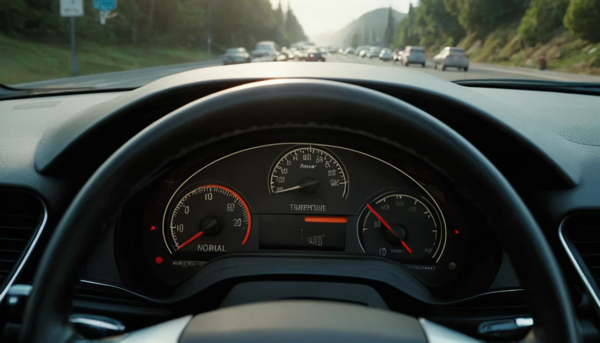
Your car’s temperature gauge watches the engine’s coolant temperature.
Its job:
- It tells you if your engine is too hot
- It helps find cooling system problems early
- It warns you before serious damage happens
When everything’s fine, the needle stays in the middle. But if it moves a lot, your engine’s temperature is unstable—and that’s bad.
Is It Normal for the Temperature Gauge to Go Up and Down? 🤔
Short answer: A little movement is okay—but big changes aren’t.
It’s normal for the gauge to go up a bit when:
- You start the engine after it’s been sitting
- You drive up steep hills or tow heavy loads
- You sit in traffic for a long time
But if it swings a lot or gets close to the red zone, something’s wrong. 🚨
What Causes the Gauge to Fluctuate? 🔍
A moving gauge usually means there’s a problem with the cooling system. Let’s look at the most common causes:
- Low coolant levels
- Thermostat issues
- Failing water pump
- Air pockets in the system
- Radiator problems
- Sensor or gauge malfunction
Each one affects how your engine heats or cools and how the gauge reacts.
Low Coolant Levels 🧊
If your coolant is low, it can’t keep the engine at the right temperature.
Look for:
- Coolant warning light
- Low fluid in the reservoir
- White steam or sweet smell from the hood
✅ Solution: Add more coolant. If it keeps getting low, look for leaks.
Thermostat Isn’t Opening or Closing Properly 🔁
Your thermostat controls coolant flow. If it doesn’t work right:
- Closed: Coolant can’t move—engine overheats
- Open all the time: Engine runs too cool, then overheats under load
✅ Solution: Replace the thermostat. It’s a cheap fix that makes a big difference!
Water Pump Failure 💦
This little pump moves coolant through your engine.
Signs of a bad pump:
- Leaking coolant near the pulley
- Engine overheating at idle
- Whining noises
✅ Fix: Replace the water pump before it breaks down completely.
Air Trapped in the System 😤
Air pockets can mess up coolant flow and confuse your gauge.
Causes include:
- Poor bleeding during coolant refill
- Leaks that let air in
✅ Solution: Bleed the system to remove trapped air. It’s a must after any coolant job!
Radiator Problems 🧯
A clogged or cracked radiator can’t cool your engine well.
Watch for:
- Rusty or oily coolant
- Visible cracks
- Overheating while idling
✅ Fix: Clean or replace the radiator.
Faulty Temp Sensor or Gauge 📟
Sometimes, the problem is electronic—not mechanical.
If your engine feels fine but the gauge is erratic:
- The sensor may be sending bad signals
- The gauge might be defective
✅ Solution: Test both parts. Replace if needed.
Quick Troubleshooting Guide 📘
Here’s a simple table to match symptoms with causes:
| Symptom | Likely Cause |
|---|---|
| Gauge spikes in traffic | Fan or coolant issue |
| Cold, then overheats suddenly | Stuck thermostat |
| Steady rise at highway speeds | Water pump or radiator |
| Erratic jumping | Air pockets or bad sensor |
| Needle drops and climbs again | Low coolant or air pockets |
How to Check Your Coolant Like a Pro 🔧
Before jumping to conclusions, check your coolant level:
- Let the engine cool completely 🔥
- Open the hood
- Find the coolant reservoir (usually clear plastic)
- Check if it’s between “MIN” and “MAX”
- If low, top it up with a 50/50 coolant mix
🚫 Never open a hot radiator cap—it can cause burns!
What to Do If You’re Driving and It Fluctuates 🚘
If the needle rises suddenly:
- Pull over safely
- Turn off the AC and turn on the heat to draw heat away from the engine
- Let it cool before checking coolant
If it happens often, get your system checked by a pro. Don’t ignore it.
Regular Maintenance Tips 🧰
Keeping your cooling system healthy is key. Here’s what you should do:
- Change coolant every 30,000–60,000 miles
- Inspect hoses for leaks or cracks
- Check radiator and cap for wear
- Watch the temperature gauge during drives
- Listen for odd sounds from under the hood
An ounce of prevention = saving thousands in repairs. 💸
When to See a Mechanic 🧑🔧
DIY is great, but know your limits:
- If you notice frequent overheating
- If the gauge needle jumps wildly all the time
- If coolant leaks won’t stop
- If your heater stops blowing hot air
Sometimes, professional diagnostics are worth the price.
Is It Safe to Drive With a Fluctuating Gauge? ⚠️
Only if it’s a small fluctuation and returns to normal quickly. But if it keeps climbing or drops suddenly:
Stop driving.
Why?
- You risk engine damage
- Head gasket failure
- Total engine shutdown
Not worth it. 😣
Real-Life Example: John’s Overheating Scare 🚙
“My gauge went red on the freeway. Pulled over, steam everywhere. Turns out my water pump failed—and it wrecked my head gasket. $2,100 later, I wish I had paid attention to the signs.”
👉 Lesson: Don’t wait until it’s too late.
Common Myths About Car Temp Gauges 🧠
Myth 1: Fluctuations mean the car is adjusting. ❌
- Truth: Temp gauges should stay fairly steady.
Myth 2: Only old cars do this. ❌
- Truth: Newer cars can have temp issues too—because of sensor failures.
Myth 3: It’s just the weather. ❌
- Truth: External temps affect your car, but shouldn’t make the gauge spike.
Preventative Upgrades to Consider 💡
Want to keep your engine cool year-round?
- Upgrade to a high-performance radiator
- Install a digital temp gauge for precision
- Use premium coolant and flush it regularly
These small investments can save you big headaches.
Know Your Warning Signs 👀
Use this cheat sheet to catch issues early:
| Warning Sign | What It Means |
| Needle near red zone | Overheating danger |
| Coolant under reservoir line | Possible leak or evaporation |
| Heater not working | Low coolant or blockage |
| Steam under hood | Radiator or hose failure |
| Sweet smell in cabin | Heater core leak |
Summary: Stay Ahead of the Heat 🔥
If your car temperature gauge goes up and down, don’t panic—but don’t ignore it either.
The top culprits are:
- Low coolant
- Thermostat problems
- Water pump failure
- Radiator issues
- Sensor glitches
🚘 Check your coolant, listen for warning signs, and get help when needed.
Your engine will thank you—and so will your wallet. 💰
FAQs
Why does my car overheat then go back to normal?
It might be a sticky thermostat, low coolant, or air pockets.
Is it safe to drive with a bouncing temperature gauge?
It’s okay if it just wobbles a bit. But if it swings a lot, stop driving right away.
What does it mean if my heater blows cold air?
It usually means you need more coolant or your heater core is clogged.
Can a bad sensor cause temperature gauge issues?
Yes, a bad sensor can make the gauge show wrong numbers.
Why does my car temp gauge rise at idle but drop when driving?
This could be because the radiator fan isn’t working or there’s a coolant problem.