

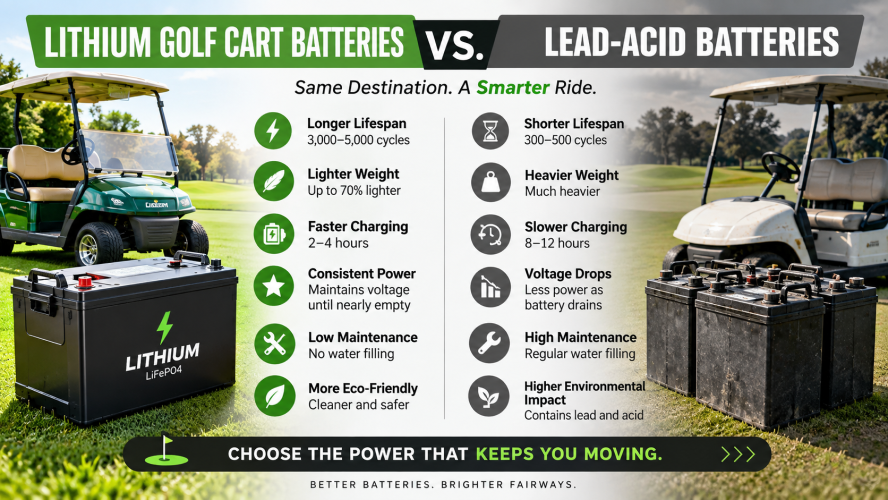
Wondering whether lithium or lead-acid batteries make more sense for your golf cart? Lithium golf cart batteries cost more upfront but usually offer longer life, lower weight, faster charging, and less maintenance. Lead-acid batteries have a lower purchase price and remain a practical choice for budget-focused golf cart owners.
The right battery depends on your budget, driving habits, charging needs, cart weight, and long-term plans. If you want lower maintenance and better efficiency, lithium is worth considering. If upfront cost matters most, lead-acid can still work well.
⚡ Lithium Vs. Lead-Acid At A Glance
Lithium golf cart batteries and lead-acid batteries power the same type of vehicle, but they work very differently. Traditional golf carts often use flooded lead-acid batteries, while newer carts increasingly use lithium-ion battery systems. Lithium batteries use advanced battery cells with a battery management system, often called a BMS.
Lead-acid batteries have been used in golf carts for decades. They are familiar, widely available, and generally cheaper to purchase. However, they are much heavier and require more routine care.
| Feature | Lithium Battery | Lead-Acid Battery |
| Upfront Cost | Higher | Lower |
| Weight | Much lighter | Much heavier |
| Charging | Faster | Slower |
| Maintenance | Very low | Higher |
| Typical Lifespan | Longer | Shorter |
| Efficiency | Higher | Lower |
| Watering | Not required | Required for flooded types |
For many owners, the decision comes down to initial price versus long-term value. A lithium battery may cost more today but can reduce maintenance and replacement needs over time. 🔋
🔋 How Lithium Golf Cart Batteries Work
Lithium golf cart batteries store energy through lithium-based battery cells. Most modern systems also include a battery management system that monitors voltage, temperature, charging, and other operating conditions. This helps protect the battery during normal use.
Lithium systems also deliver relatively consistent power during discharge. That can help your golf cart maintain more predictable performance as the battery gets lower. Unlike some lead-acid systems, lithium batteries do not require regular watering.
Another major advantage is weight. A lithium golf cart battery can weigh far less than an equivalent lead-acid battery bank. That lower weight can reduce the load carried by the cart and may improve acceleration, handling, and energy efficiency.
🪫 How Lead-Acid Golf Cart Batteries Work
Lead-acid batteries use lead plates and an electrolyte solution to store electrical energy. Flooded lead-acid batteries are common in older golf carts and require regular maintenance. Owners usually need to check water levels and keep the battery terminals clean.
There are also sealed lead-acid options, including AGM designs. These require less maintenance than flooded batteries but still have the basic limitations of lead-acid technology. They remain attractive because their purchase price is often lower.
Lead-acid batteries can also handle many everyday golf cart applications. If you drive short distances and already have a compatible system, replacing your existing batteries with lead-acid units may be simple and affordable.
💰 Lithium Vs. Lead-Acid Battery Cost
Price is often the first thing golf cart owners notice. A lithium battery system usually has a higher upfront purchase price than a comparable lead-acid setup. However, comparing only the sticker price can miss important long-term costs.
Lead-acid batteries may require water, cleaning, maintenance, and earlier replacement. Lithium batteries generally need much less routine attention. Total cost of ownership is therefore more useful than purchase price alone.
| Cost Factor | Lithium | Lead-Acid |
| Initial Purchase | Higher | Lower |
| Routine Maintenance | Low | Moderate to high |
| Watering | No | Yes for flooded types |
| Replacement Frequency | Usually lower | Usually higher |
| Charging Efficiency | Generally higher | Generally lower |
| Long-Term Value | Strong for frequent use | Strong for low-cost entry |
Think about how often you use your golf cart. A cart used several times each week may benefit more from lithium’s long-term advantages. A lightly used cart may make the lower initial cost of lead-acid more appealing.
⚙️ Battery Performance And Driving Range
Battery performance depends on more than chemistry. Your golf cart’s motor, terrain, speed, passenger load, tire pressure, and driving style all affect range. Still, battery technology can make a noticeable difference.
Lithium batteries generally maintain a more stable voltage during discharge. This can provide consistent performance across much of the battery’s usable capacity. Lead-acid batteries can experience a more noticeable voltage drop as they discharge.
Lithium also tends to provide more usable energy from its rated capacity. This is one reason lithium golf cart conversions are popular among owners seeking improved range and performance. 🚗
🏋️ Why Battery Weight Matters
A typical lead-acid golf cart battery bank can add significant weight to a cart. That extra weight affects how much energy the vehicle needs to move. It can also influence acceleration, handling, and performance on hills.
Lithium batteries are much lighter. Removing hundreds of pounds from a golf cart can change how the vehicle feels while driving. The exact improvement depends on the cart and the battery system installed.
Weight can matter even more for owners who regularly carry passengers or equipment. A lighter battery system gives the golf cart less mass to move. That can contribute to improved efficiency and overall driving comfort.
🔌 Charging Time And Efficiency
Charging time is another major difference between lithium and lead-acid golf cart batteries. Lithium systems can generally accept charging more efficiently and may recharge faster when paired with a suitable charger. Lead-acid batteries typically need more time to complete a full charging cycle.
Your charger is important, regardless of battery type. A lithium battery should use a charger designed for the specific lithium battery system. Using an incompatible charger can create performance and safety problems.
Charging habits also affect battery life. Avoid choosing a battery solely because it charges quickly. Instead, make sure the battery, charger, BMS, and golf cart electrical system are designed to work together.
🧰 Maintenance Requirements Compared
Maintenance is one area where lithium batteries have a clear practical advantage. Most lithium golf cart batteries do not need watering or the same level of routine cleaning associated with flooded lead-acid batteries. That means fewer maintenance tasks for the owner.
Flooded lead-acid batteries need regular water checks. The electrolyte level should be maintained according to the battery manufacturer’s instructions. Battery terminals may also need cleaning to help prevent corrosion.
If you prefer a low-maintenance golf cart, lithium can be attractive. You can spend less time checking battery water and more time using your cart. For busy owners, that convenience can be an important part of the buying decision. 👍
🛡️ Battery Life And Durability
Battery lifespan depends on the battery quality, charging habits, temperature, depth of discharge, storage conditions, and usage. Lithium golf cart batteries generally offer a longer cycle life than traditional flooded lead-acid batteries. However, no battery lasts forever.
Lead-acid batteries can provide reliable service when properly maintained. Poor watering habits, deep discharges, heat, and improper charging can shorten their useful life. Regular maintenance therefore plays an important role.
Lithium batteries can also degrade over time. A quality BMS helps manage operating conditions, but it cannot prevent normal battery aging. Always check the manufacturer’s stated cycle life and warranty before buying.
🌡️ Safety And Battery Management
Modern lithium golf cart batteries typically include a battery management system. The BMS can monitor important battery conditions and provide protection against certain electrical and temperature-related problems. This makes the BMS an important part of a lithium battery system.
Lead-acid batteries have their own safety considerations. Flooded batteries contain electrolyte and can produce hydrogen gas during charging. Proper ventilation, correct charging procedures, and careful maintenance are important.
For either battery type, installation matters. Follow the manufacturer’s instructions and use compatible electrical components. A professional installation can also help ensure the battery, charger, cables, and golf cart controller work correctly.
🛒 What To Check Before Buying A Lithium Battery
Not every lithium golf cart battery is the same. Before purchasing, check the specifications carefully. The correct battery must match your golf cart’s voltage and electrical requirements.
Look at these factors before making a decision:
- Battery voltage — Confirm it matches your golf cart.
- Capacity — Compare amp-hours and usable energy.
- BMS protection — Check what protections are included.
- Charger compatibility — Use the correct lithium charger.
- Warranty — Review coverage and warranty conditions.
- Cycle life — Compare the manufacturer’s rated cycles.
- Physical size — Make sure the battery fits your cart.
- Installation requirements — Check cables, terminals, and mounting needs.
A reputable lithium golf cart battery manufacturer should provide clear specifications. Avoid choosing a battery based only on a low price. Quality, compatibility, warranty, and after-sales support matter just as much.
🌱 Which Battery Is Better For Frequent Golf Cart Use?
If you use your golf cart frequently, lithium can offer several practical benefits. Its lighter weight, low maintenance, efficient charging, and longer expected cycle life can make it well suited to regular use. This is especially useful for people who depend on their cart for transportation around larger properties.
Lead-acid batteries may make more sense for occasional users. Their lower upfront price can reduce the initial investment. If your golf cart is used only for short trips, you may not need all the benefits offered by lithium.
| Best For | Lithium | Lead-Acid |
| Frequent Driving | ✅ | Possible |
| Occasional Driving | ✅ | ✅ |
| Lowest Upfront Cost | ❌ | ✅ |
| Low Maintenance | ✅ | ❌ |
| Lightweight Cart | ✅ | ❌ |
| Long-Term Use | ✅ | Possible |
| Simple Replacement | Depends on Cart | Often easier |
The best choice depends on how you actually use your cart. Your driving pattern matters more than simply choosing the newest technology.
🚗 Lithium Or Lead-Acid: Which Should You Choose?
Choose lithium if you want a lighter golf cart, less maintenance, efficient charging, and a battery designed for frequent use. The higher upfront cost can be easier to justify when you plan to keep the cart for years. Lithium is particularly appealing for owners who value convenience and long-term performance.
Choose lead-acid if your main goal is keeping the initial purchase price low. It can still provide dependable golf cart power when properly maintained. This option can work well for occasional recreational use and owners who already have a compatible lead-acid setup.
Before buying, compare total ownership costs, not just battery prices. Consider replacement intervals, maintenance, charging, usable capacity, and warranty coverage. 🔋 A careful comparison can help you find the battery that fits both your golf cart and your budget.
🔍 Frequently Asked Questions
Are Lithium Golf Cart Batteries Worth It?
Lithium golf cart batteries can be worth the higher upfront cost for frequent users. They are lighter and generally require less maintenance than flooded lead-acid batteries. Long-term value depends on battery quality, usage, and lifespan.
How Long Do Lithium Golf Cart Batteries Last?
A quality lithium golf cart battery can provide many more charge cycles than a traditional lead-acid battery. Actual lifespan depends on usage, charging, temperature, and maintenance. Always check the manufacturer’s cycle-life rating and warranty.
Can I Replace Lead-Acid With Lithium?
Many golf carts can be converted from lead-acid to lithium batteries. However, the battery voltage, charger, cables, controller, mounting system, and other components must be compatible. Check your cart and battery manufacturer’s requirements before converting.
Do Lithium Batteries Charge Faster?
Lithium golf cart batteries can generally charge faster than comparable lead-acid systems. Charging speed depends on the battery capacity and charger output. Always use a charger specifically approved for your lithium battery.
Which Golf Cart Battery Needs Less Maintenance?
Lithium golf cart batteries generally need less routine maintenance than flooded lead-acid batteries. They do not require regular electrolyte watering. Lead-acid batteries need more attention, especially when using flooded battery designs.
✅ Final Takeaway
The lithium versus lead-acid decision comes down to upfront cost, usage, maintenance, weight, charging, and long-term value. Lithium golf cart batteries offer a lightweight, low-maintenance solution with strong performance and longer cycle life. Lead-acid batteries remain a lower-cost option with proven technology and broad availability.
For frequent golf cart use, lithium may provide greater convenience over the long run. For occasional use or a tight initial budget, lead-acid may still meet your needs. Whatever you choose, verify voltage, capacity, charger compatibility, warranty, and installation requirements before buying.
The smartest battery choice is the one that matches how you drive, charge, maintain, and plan to use your golf cart.




Leave a Reply