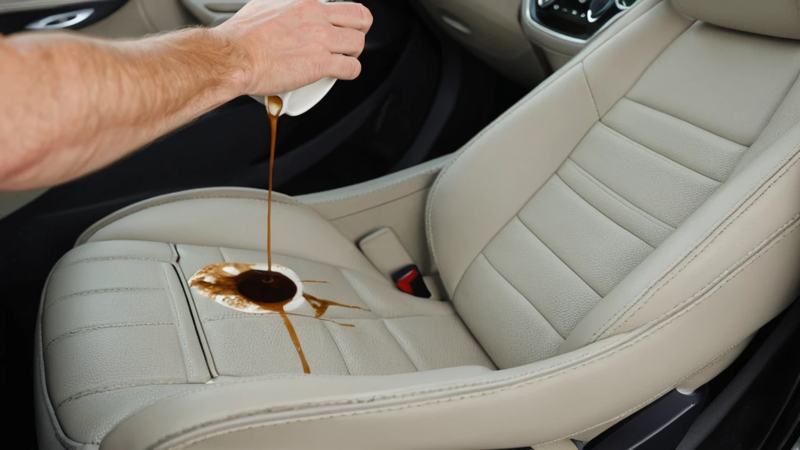
How to repair a tear in leather seats fast and cheap? Learn step-by-step methods for flawless, lasting leather fixes at home.
How to Repair a Tear in Leather Seats – Step-by-Step DIY Guide 🚗
Ever stared at a torn leather seat and thought, “Well, that’s ruined”?
Don’t worry—you’re not alone. Leather is luxurious, but it’s also prone to tears, cracks, and scratches over time. But here’s the good news: you don’t need to spend hundreds of dollars or replace the seat entirely. With the right tools and a little patience, you can repair leather tears at home—and make it look nearly brand new.
Let’s break it all down in simple, doable steps.
Know Your Leather First 🧐
Before grabbing a patch or glue, you need to understand what type of leather you’re working with.
Common Types of Leather Found in Car Seats:
| Leather Type | Look & Feel | Common in |
|---|---|---|
| Genuine Leather | Smooth, natural grain | Mid to high-end vehicles |
| Faux Leather (PU/Plastic) | Very uniform, glossy | Budget models |
| Bonded Leather | Grainy, mixed textures | Older or economy cars |
| Aniline or Semi-Aniline | Soft, rich color | Premium luxury cars |
Why this matters: Different leathers absorb adhesive and filler differently. Using the wrong product could make the tear worse.
What Causes Leather Seats to Tear? 😬
Understanding the why helps prevent future damage.
- Aging – Leather dries out over time and becomes brittle.
- Sunlight – UV rays break down leather fibers.
- Improper Cleaning – Harsh cleaners can weaken the leather.
- Sharp Objects – Car keys, belt buckles, or pet claws.
- Heavy Use – Constant in-and-out wears down the seat edges.
Supplies You’ll Need 🛠️
Here’s your go-to list for repairing a leather tear:
- Leather repair kit (includes filler, adhesive, tools)
- Sub-patch fabric
- Rubbing alcohol or mild cleaner
- Microfiber cloth
- Sandpaper (220–320 grit)
- Palette knife or spatula
- Leather colorant or dye
- Hairdryer or heat gun (optional)
Tip: You can find complete kits online or at auto stores. Always check that it includes a sub-patch and color compound.
Step 1: Clean the Area Thoroughly 🧼
Start by removing all dirt and oils around the tear. Use rubbing alcohol or a leather-safe cleaner.
- Dampen your microfiber cloth.
- Gently wipe around the tear.
- Let it dry completely before moving on.
Important: A clean surface helps the adhesive bond better and last longer.
Step 2: Trim & Prep the Tear ✂️
Is the tear jagged or curling? Use scissors to carefully trim any loose threads or curled edges.
Then:
- Sand the area lightly with fine-grit sandpaper.
- This helps the filler and adhesive stick better.
Smooth prep = smoother final look. ✨
Step 3: Insert the Sub-Patch 🔧
This is a key step for strength.
| Why Use a Sub-Patch? | What It Does |
|---|---|
| Prevents re-tearing | Reinforces the weak spot |
| Holds filler in place | Ensures a level surface |
| Adds durability | Extends life of the repair |
- Cut the sub-patch slightly larger than the tear.
- Slide it underneath the torn edges using tweezers.
- Smooth it out so it lays flat beneath the leather.
Step 4: Apply Leather Adhesive Carefully 🧴
Now you’ll glue the torn edges down:
- Use a small palette knife or spatula.
- Apply adhesive under the edges and press gently.
- Hold for 1–2 minutes until it bonds.
- Let it dry for at least 30 minutes.
Pro Tip: Use a heat gun to speed up drying (but don’t overheat the leather).
Step 5: Fill the Tear with Compound 💡
Once the adhesive is dry, it’s time to make it look flawless:
- Use the leather filler compound from your repair kit.
- Apply thin layers with the spatula.
- Smooth each layer and let it dry before adding the next.
- Build it up slowly until the surface is level.
🧠 Don’t rush this part. The smoother the filler, the better the end result.
Step 6: Sand Again for a Seamless Finish 🧽
Once the compound is dry:
- Lightly sand the area with fine-grit paper.
- Blend the edges into the surrounding leather.
This is where the magic starts happening. Your tear will start to disappear into the seat.
Step 7: Apply Leather Dye or Colorant 🎨
Now match the color so it blends perfectly.
| Product | Use For | How to Apply |
|---|---|---|
| Leather Colorant | Exact match finish | Sponge or spray |
| Leather Dye | Deep color repair | Brush or dab |
| Leather Paint | Surface-level touch-up | Light coats |
- Use a sponge to dab the dye gently.
- Blend it outward from the tear.
- Let it dry fully between coats.
- Apply multiple thin coats, not one thick one.
Step 8: Seal & Protect the Area 🔒
Once the color looks good, protect your work:
- Use a leather sealant or finisher.
- Apply with a clean cloth or sponge.
- Let it cure for 24 hours before sitting on it.
✨ Optional but recommended: Apply leather conditioner after sealing for extra protection and softness.
Quick Recap: Tear Repair Checklist ✅
| Step | What to Do |
|---|---|
| Clean Area | Remove dirt and oils |
| Trim Tear | Smooth the edges |
| Insert Patch | Reinforce from underneath |
| Apply Adhesive | Bond edges together |
| Fill Tear | Use leather compound |
| Sand Surface | Smooth and blend |
| Add Color | Match with dye |
| Seal Finish | Protect your repair |
Tips to Avoid Future Leather Tears 🛡️
- Park in shaded areas to avoid sun damage.
- Use seat covers if you have pets or kids.
- Clean and condition leather monthly.
- Avoid dragging keys, belts, or tools across seats.
- Keep sharp objects off the seats.
👀 Pro tip: Use a leather conditioner with UV protection for best results.
When Should You Call a Pro? 📞
Some tears may need expert help:
- Tear is longer than 3 inches.
- Damage is on a seam or joint.
- You can see the cushion foam underneath.
- You tried DIY and it didn’t hold up.
In these cases, mobile leather repair services or upholstery shops can provide near-invisible fixes.
Final Thoughts 💭
A leather seat tear might look like a disaster at first—but it doesn’t have to stay that way. With the right approach, you can repair it yourself and save a ton of money.
The trick is taking your time, using quality materials, and following each step closely. You’ll not only restore the beauty of your seats but also add years to their life.
🎯 Don’t let a small rip become a big deal—fix it right and ride in style again.
FAQs
How do I fix a tear in my car leather seat at home?
You’ll need a repair kit, adhesive, and colorant. Clean the area, insert a patch, glue it, fill the gap, and color it to match.
Can I use super glue on leather seat tears?
Super glue dries too fast and cracks. Use leather-specific adhesive for a flexible, durable fix that won’t damage your seat.
What’s the best leather repair kit for beginners?
Look for kits that include sub-patches, filler, adhesive, colorant, and tools. Brands like Fortivo or Coconix are beginner-friendly.
How long does a leather seat repair last?
If done properly, a repair can last several years. Using sealants and regular conditioning will extend its durability.
Is it cheaper to repair or replace a leather seat?
Repairing is far cheaper—usually under $50 if done at home, compared to $300–$1,000 for full replacement.
References
https://www.leatherepaircompany.com
https://www.familyhandyman.com
https://www.autoblog.com